After 8 Failed IVFs, a Couple Conceived Naturally. The Method? A 2,000-Year-Old Diagnostic Tool

Nikita Altukhov trained in British schools and Russian medical academies, then spent 23 years mastering pulse diagnosis in India. We spoke with him about bridging ancient practice and clinical rigor—and why some patients find answers where modern protocols fall short.
A pronounced shift is underway in global healthcare: patients increasingly consult physicians not out of necessity but for prevention. According to Precedence Research, the global alternative medicine market is projected to exceed $1.2 trillion by 2034. The demand for preventive diagnostics, personalized treatment, and non-invasive correction methods has become a structural pillar of the healthcare economy. Yet this growth creates a critical gap. As the field expands, it attracts practitioners who lack clinical accountability—those who treat ancient systems as lifestyle branding rather than medicine. The result is a credibility problem: traditional methods with millennia of documented practice get dismissed alongside weekend-certification wellness coaches. What the market now requires is not a choice between “Western” and “Eastern” paradigms, but expert integration—practitioners who can bridge academic rigor with traditional depth.
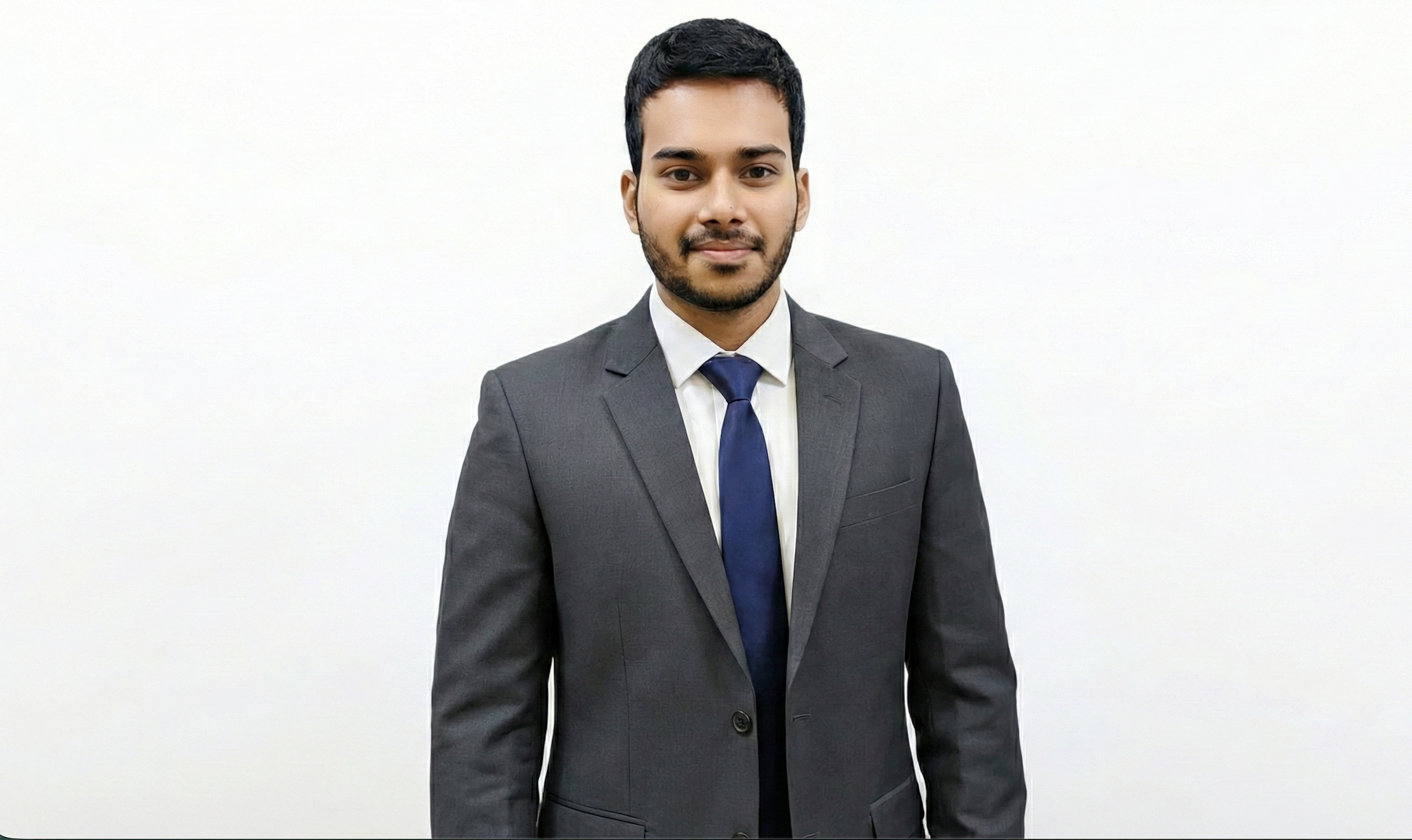
Nikita Altukhov represents precisely this synthesis. Trained at one of Russia’s leading medical academies and educated in England on scholarship, he then spent over two decades in Indian ashrams and monasteries—studying pulse diagnosis under hereditary physicians, learning Sanskrit to access original texts, and receiving formal initiation into traditional lineages of knowledge transmission. Today he practices across Russia, the USA, and Canada, combining clinical protocols with Ayurvedic diagnostics. His patients include couples who conceived naturally after eight failed IVF cycles, and women maintaining hormonal health well into their sixties. We spoke with him about why “Eastern medicine without a clinical foundation turns into esotericism,” how he decides when to trust the pulse and when to order lab tests—and about the one pulse pattern he has encountered only once in 23 years of practice: the steady, soft rhythm the ancient texts call “lotus-like pulse”.
“Eastern medicine without a clinical foundation turns into esotericism.”
You grew up in a medical dynasty, were educated at the British Whitgift School and one of Russia’s top medical academies, and then suddenly turned to ancient Eastern practices. When did you feel that the materialistic model was insufficient?
My father is an anesthesiologist-resuscitator; my grandfathers were surgeons and internists. I was introduced to an environment where death was not an abstraction but a daily reality as a child. As a teenager, I suffered a head injury, and something flipped inside me. I felt drawn to studying philosophical and religious works. Simultaneously, I pursued intensive English studies, and in England, I easily adapted to a different cultural system. Academic medicine provided the foundation—anatomy, physiology, and clinical thinking. But during my first years at the academy, an internal conflict arose: human beings were reduced to biochemistry and organs, and I felt that wasn’t the whole picture. I lacked an understanding of human wholeness—the connection between body, psyche, social, and spiritual levels. Studying Hippocrates, Avicenna, Ayurvedic texts, and the Upanishads, I saw that centuries ago, there were highly developed surgical practices, diagnostics, and lineages of knowledge transmission. It was a structured science, not “folk healing.” I realized then that I didn’t need an alternative to academic medicine; I needed an expansion of it. Academic medicine describes material anatomy, while Eastern systems add functional and subtle anatomy—channels, rhythms, and interconnections. Without a mandatory theoretical medical base, one cannot talk about integration or responsibility. Eastern medicine without a clinical foundation turns into esotericism.
You eventually spent over two decades studying in India—Haridwar, Rishikesh, and multiple ashrams. When you first traveled there, what were you looking for? Knowledge, an alternative?
A living tradition and teachers. A key meeting took place at the Shantikunj Ashram: an 88-year-old elder, a hereditary physician, astonished me with his physical state and mental clarity. For the only time in my life, I observed the unique “lotus-like pulse”—the steady and soft pulse of a saint. With him, I began the study of pulse diagnosis: superficial levels reflect reactions to external factors, while deep ones reflect systemic processes; combinations of Doshas—Vata, Pitta, Kapha—help us understand the innate constitution, Prakriti, and current imbalances, Vikriti. In the early years, I would listen to a pulse for two hours. I learned to feel movements described as “the snake,” “the frog,” or “the swan.” This isn’t poetry for poetry’s sake; it is a description of the motion of the wave beneath the fingers. The “snake” is slithering and thin. The “frog” is intermittent and jumping. The “fire” is fast and superficial. Behind these images lie clinical regularities. It is the language of physiology, just expressed differently.
“I wanted to preserve, not ‘excise'”
You mentioned studying Sanskrit and gaining access to monastery libraries. How does a physician’s view of health and disease change when they encounter these traditions of knowledge transmission?
Western medicine responds to the symptom; Eastern medicine addresses the cause. In the East, health is not the absence of disease, but the harmony of all levels—a philosophy of responsibility and prevention. In the monastery, I studied Sanskrit and had access to the library. This was a science, not folklore, with a strict system of knowledge and experience transfer—Parampara—where it matters not only “what” is transmitted, but “who” is transmitting it. Now, I wanted to preserve, not “excise.” I decided to bridge the academic base and traditional pulse diagnosis into a single clinical model.
While studying various systems from Ayurveda to Tibetan medicine, you visited the Ivolginsky Datsan and received initiation from Dr. Nida Chenagtsang. What commonalities did you find in these approaches?
Wholeness and prevention, viewing the human being as a system of interconnections. This helps one work at the early stage of a disease when symptoms haven’t yet manifested. The cause of illness often lies deeper than biochemistry.
“If a Person Does Not Change the Cause, the Disease Returns”
You’ve now been practicing pulse diagnosis for 23 years and have examined thousands of patients. At what point did you begin to feel like a true professional—not a student?
It didn’t happen overnight. It took 10 years to master the practice; after 15 years, I felt genuinely confident. “Fast-track” Ayurvedic courses are a sham; there are very few true pulse specialists. I have seen thousands of people. I examine at least ten pulses a day, and now I can diagnose quickly. But in the early years, I experienced constant doubt. One must know that external factors, such as stress or a sauna, can affect the superficial pulse; the middle level reflects functional disturbances, while the deep level indicates tendencies that may manifest years later. The accumulation of observations yields results: you begin to see patterns before the tests do. Not because you “guessed,” but because you have correlated hundreds of cases. Even now, I don’t believe I “know everything.” In medicine, overconfidence is dangerous.
Pulse diagnosis is often dismissed as intuitive or mystical. You examine at least ten patients a day and have built a practice across three countries. How do you describe this skill in clinical terms?
Intuition is compressed experience. My father, after decades of work, literally “feels” the required dosage of anesthesia—that is, a professional sensitivity based on knowledge, not mysticism, but the memory of the body and the brain. I always collect a medical history and, if necessary, order laboratory tests. The pulse can point the way, but confirmation is important. Integrative medicine does not deny evidence‑based medicine—it expands it by enabling earlier recognition of imbalance. I combine academic medicine and Ayurveda: tests, clinical confirmation, pulse diagnosis, and herbal medicine—sometimes mineral therapy. Everything is individualized.
From your experience in Russia, the USA, and Canada, do you notice differences in patient requests?
The cultural context does have an impact. In Russia, patients often come after unsuccessful treatment attempts, when they have already tried everything. Abroad, many are familiar with Ayurveda beforehand and are specifically looking for a personalized approach. In Canada, colleagues show professional interest—they discuss biorhythms, prevention, and lifestyle. Indians are disciplined and trusting; they follow recommendations without doubt. Europeans and Americans, however, are more skeptical and need confirmation. But everywhere, the main principle remains: if a person does not change the cause, the disease returns.
Could you share specific cases where this integrative approach made a measurable difference—situations where patients found answers after conventional methods had failed?
Certainly. After eight unsuccessful IVF attempts, a couple managed to conceive, thanks naturally to precise pulse diagnosis, dietary correction, herbal medicine, and a specialized branch of Ayurveda called Rasa Shastra. A 39-year-old woman diagnosed with infertility, after eight months of Ayurvedic therapy, managed to conceive and give birth to a healthy girl. There are also successful cases of maintaining hormonal health in women during perimenopause and menopause. There have been situations where, through the pulse, I felt systemic tension in the liver and biliary tract despite minimal clinical signs—tests were still normal. A few months later, the patient received laboratory confirmation. But I always emphasize: the pulse is a guide. If there is a suspicion of serious pathology, I refer the patient for a full examination. [Editor’s note: Individual results vary. Ayurvedic therapy is used as a complement to, not a replacement for, conventional medical care. Patients with fertility concerns should consult licensed reproductive specialists.]
“Without Personal Maturity, It Is Impossible to Be a Physician”
Since 2025, you have been speaking at international conferences—for example, “Pharmacogenetic Testing and the Efficacy of Pharmacotherapy in Cardiology”—and lecturing on Eastern pharmacology and biorhythms. How does the professional community react?
There is high interest. Especially in the topic of biorhythms—the ability to account for organ activity hours when prescribing therapy, allowing for drug dosage adjustment and reduced side effects. After my presentations, colleagues propose joint research projects and educational cooperation. Currently, I am interested in teaching and creating a school where academic medicine and traditional systems complement rather than oppose each other. Another goal of mine is to work with the elderly—maintaining quality of life, functional capacity, and dignified self‑care. Given the global trend toward anti-aging, I see a field of activity here drawing on the longevity experience of traditional systems. I am also writing a book and expect it to generate interest among my colleagues.
You’ve built a practice across three countries, you’re writing a book, and you have six children. Looking back at this journey, what was the most difficult part?
The internal search. For many years, I traveled alone, lived in different cultures, and looked for the answer to the question “Who am I?” I began studying philosophy at eleven—Plato, Aristotle, later Jung, and Grof. At fifteen, I turned to world religions. All of this was shaping something inside me before I even entered medicine. Over time, I realized that without personal maturity, it is impossible to be a physician. My Buddhist friends joke that one year raising a child equals ten years of monastic asceticism—and they’re right. Fatherhood exposes the weaknesses in your character that you cannot hide from. It demands daily discipline and conscious work on yourself. In the Eastern tradition, life is divided into stages—learning, family, gradual renunciation, and preparation for departure. I perceive this as the natural evolution of a physician: from the accumulation of knowledge to its transmission.