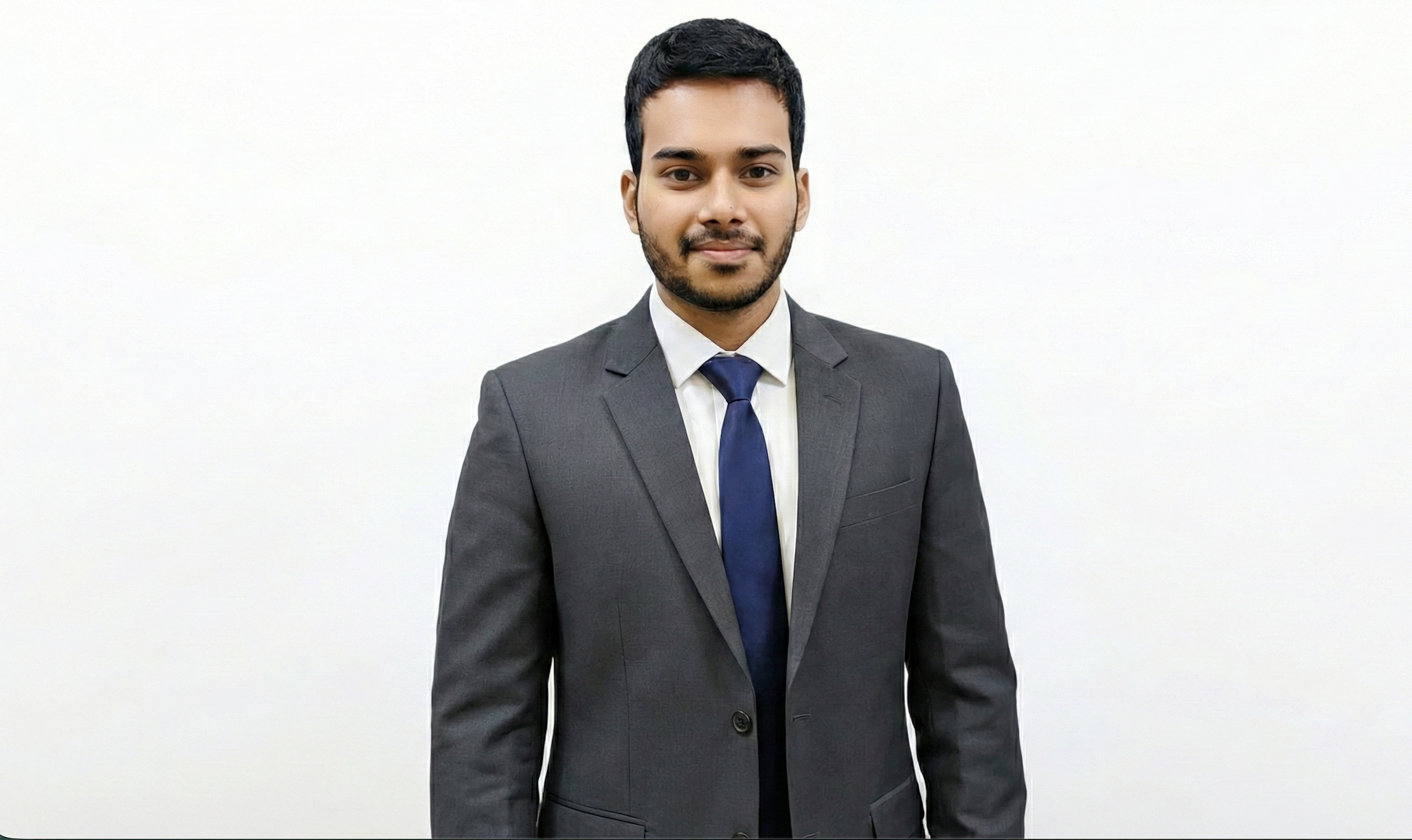
The Data Visionary Reimagining America’s Broken Claims System

In 2023 alone, hospitals spent $25.7 billion fighting insurance denials, a 23% increase from the year before. Nearly $18 billion was spent to overturn claims that should have been paid. Denial rates now average 11.8%, with some plans rejecting over half of in-network claims. While hospital CFOs blame administrative drag, Umidjon Saidkhujaev sees an engineering problem ripe for a modern solution. Saidkhujaev is the founder and CEO of ClarityClaim AI, a Bethlehem-based startup developing an AI platform to tackle claim denials and appeals. Still pre-funding, ClarityClaim focuses on data infrastructure, regulatory intelligence, and health equity, areas gaining urgency in U.S. healthcare.
“After decades of increasing reimbursement complexity, it’s time to use AI to make the process understandable, auditable, and fair,” he says.
From national megaprojects to U.S. health-tech
Saidkhujaev’s path into healthcare AI differs significantly from the typical Silicon Valley route. His early career was spent inside major Central Asian institutions. After starting at Deloitte, he joined the transformation office at Navoi Mining and Metallurgical Company, one of Uzbekistan’s largest industrial firms.
There, he led the development of a real-time business intelligence platform that replaced fragmented spreadsheets across a 50,000-person enterprise.
The system accelerated reporting cycles and helped prepare the company for international capital-market readiness. He later moved to Asaka Bank, one of Uzbekistan’s top three banks, where he built AI-enabled analytics for IFRS 9 credit-risk modeling and regulatory reporting. Tasks that once took days were automated and later used as case studies in executive banking programs.
“Working in those environments forces you to think in systems,” he says. “You can’t just build a dashboard; you have to design how data moves through an entire institution and stands up to regulators.”
After earning an MBA in Business Analytics from Lehigh University, he joined Axtria, a U.S. analytics firm serving global life sciences clients. There, he worked on data engineering, machine learning, and business-intelligence tools for pharmaceutical companies. By 2025, he turned his systems-thinking approach to one of healthcare’s most persistent headaches: claim denials.
A denial crisis with an equity shadow
ClarityClaim’s research shows over 70% of providers say denials are rising, and two-thirds face slower payments. Denial rates are almost twice as high for marginalized communities. Low-income patients are 43% more likely than others to have claims denied, resulting in higher out-of-pocket costs and greater barriers to care.
“A denied claim can mean a rural hospital misses payroll, or a low-income family skips needed care,” he says. ClarityClaim aims to tackle financial waste, operational strain, and inequity.
Building a vertical AI stack for claims
ClarityClaim is building a vertical AI stack, specialized models, rules, and workflows, for claims denials and appeals.
Key planned features include:
- Denial risk prediction: Models score claims before submission.
- AI-powered claim scrubbing: Checks for errors and missing info.
- Generative appeal letters: Draft appeals in seconds, citing policy and clinical evidence.
- Real-time policy knowledge graph: Indexes 200,000+ payer rules and regulations.
- Equity analytics: Dashboards show disparities in denials and appeals.
The platform uses secure APIs, modern ML, and explainability-first design. Goals: sub-200ms response times and over 100,000 claims per day, to be validated in pilots.
“The policy graph, equity analytics, and explainability are exactly what compliance teams need,” says one investor who previewed the system.
Early-stage, but architected for scale.
ClarityClaim is still pre-funding with no production users. The MVP in development focuses on denial prediction, draft appeals, and dashboards. The roadmap: enterprise versions, Medicare and Medicaid support, national integrations, and future features like blockchain audit trails. Commercially, ClarityClaim is targeting the $172 billion U.S. revenue-cycle management market. If adopted by 1,200 to 1,500 provider organizations, projections show potential for up to $1.2 billion in annual recurring revenue by Year 5.
“These are modeled scenarios, not promises,” Saidkhujaev says. “But they help us determine whether we’re building a venture-scale company or just a useful tool.”
AI built for the audit, and the founder behind it
Federal AI policy now supports innovation, but healthcare still imposes strict requirements such as HIPAA, Medicare, and Medicaid coverage criteria, and nondiscrimination protections. ClarityClaim’s planned governance aligns with the NIST AI Risk Management Framework and includes zero-trust security, HIPAA compliance, a future SOC 2 pathway, and quarterly bias monitoring. With the executive team still in formation, Saidkhujaev plays a dual role as CEO and principal architect. His influence is visible in model explainability decisions, BI dashboard design, audit-trail design, and equity dashboard usability. The core idea: denial management, long dismissed as routine back-office work, is poised to become an area where AI will soon be expected, not optional.
“In five or ten years, it will be unthinkable that we’re still handling denials with spreadsheets and copy-paste letters,” he says. “Someone is going to build the infrastructure that makes this process faster, more accurate, and more equitable.”
Whether ClarityClaim becomes the dominant AI layer or a specialized engine inside larger platforms, Saidkhujaev’s path, from national transformation initiatives to U.S. pharma analytics and now healthcare AI, positions him as a rising, outstanding figure in the emerging intersection of revenue-cycle operations, regulatory technology, and artificial intelligence. For a healthcare system strained by administrative waste and equity concerns, that systems-level vision may be precisely what the next generation of denial tools needs.